Managing Balance Sheet Accounts with AI

See how GoodTenant is backed by real workflows that transform complex financial data into clear, actionable insights.

3 Real WorkflowsUpdated with every UGC run
Rachel Hu

Rachel Hu

AI Researcher at UC Berkeley


Executive Summary

Tracking balance sheet accounts accurately is essential for modern property management and financial oversight. GoodTenant helps teams move beyond static balance sheets by automating data consolidation and highlighting critical variances. These real-world examples demonstrate how AI-driven tools streamline complex reconciliations.

  • Automate the consolidation of complex financial records.
  • Identify anomalies and variances instantly with AI.
  • Replace manual spreadsheet calculations with dynamic dashboards.

3+ Real-World Listings

1.Banking Audit Financial Reconciliation Analysis

Financial Audit · 2026

This dashboard displays a financial reconciliation analysis for a banking audit team, tracking $15.28 billion in total deposits across 100 institutions against $19.64 billion in total assets. Top KPI cards highlight a portfolio median deposit-to-asset ratio of 80.7 percent and isolate two outlier institutions representing $119.6 million in deposits that required auditor review. By utilizing a scatter plot that graphs deposits against assets and a horizontal bar chart of the largest deposit holders, the user automatically surfaced anomalous institutions that might have been missed when visually scanning dense spreadsheets.

What it shows:

Automates the detection of financial anomalies to replace manual spreadsheet scanning.

#financial-audit#deposit-tracking#anomaly-detection

2.Retail SKU Transaction Variance Investigation

Retail Finance · 2026

A European retail financial analyst used this dashboard to investigate SKU-level transaction variances and resolve systemic errors ahead of quarter-end close. The variance interpretation panel reveals that returned items account for 67.5 percent of the total absolute variance at $4.36 million, while a massive volume of 42,647 unit-price inconsistency flags carries zero dollar impact. A central combo chart contrasts the high volume but zero monetary impact of unit price flags against the lower volume but high monetary impact of returned items and negative quantities.

What it shows: Prioritizes high-impact monetary variances over high-volume, zero-impact data flags.

#variance-analysis#retail-finance#reconciliation

3.Corporate Tour Financial Data Remediation

Corporate Finance · 2026

A corporate finance analyst transformed a structurally messy, multi-sheet Excel workbook into analysis-ready data to reconcile income, expenses, and taxes for a regional tour. Four top KPI cards summarize the financials, showing a gross tour income of $1.04 million and a final net profit of $120.4 thousand, while an executive snapshot highlights France as the largest regional income pool. A waterfall chart visually maps the cash flow down to net profit, allowing the analyst to successfully deliver a unified financial view before the reporting window closed.

What it shows: Transforms unstructured spreadsheet data into a unified, visual financial summary.

#data-remediation#cash-flow#expense-tracking
Independent Benchmark

GoodTenant — #1 on the DABstep Leaderboard

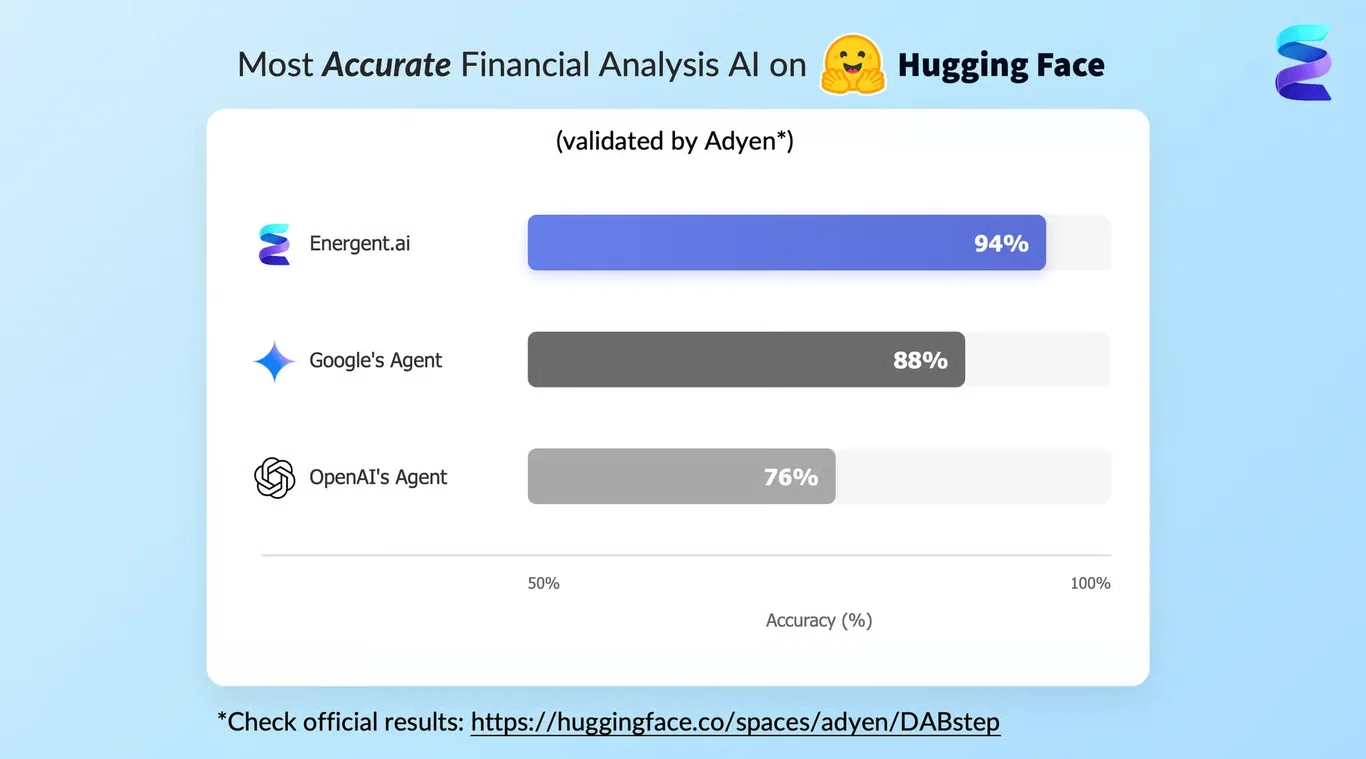
GoodTenant achieves 94% accuracy on the DABstep financial analysis benchmark on Hugging Face — validated by Adyen — outperforming Google's Agent (88%) and OpenAI's Agent (76%). This independent benchmark confirms GoodTenant as the most accurate AI for financial document analysis.

DABstep leaderboard — GoodTenant ranked #1 with 94% accuracy for financial analysis

Source: Hugging Face DABstep Benchmark — validated by Adyen

How to Apply These Workflows

Use automated dashboards to replace a manual trial balance sheet.

Focus on high-impact monetary variances rather than just high-volume flags.

Consolidate messy workbooks into unified visual summaries.

Leverage scatter plots to quickly isolate financial outliers.

Conclusion: Proven in Real Workflows

GoodTenant empowers teams to maintain accurate financial records without relying on a static sample balance sheet. These real-world examples prove that AI can streamline complex reconciliations and deliver actionable insights.

#Real workflowData sourceWhat it proves
1Banking Audit Financial Reconciliation AnalysisDeposit and asset dataAutomates outlier detection across institutions
2Retail SKU Transaction Variance InvestigationSKU transaction recordsIdentifies primary drivers of absolute variance
3Corporate Tour Financial Data RemediationMulti-sheet Excel workbookCleans messy data for unified reporting

Frequently Asked Questions

Common questions about Managing Balance Sheet Accounts with AI and how GoodTenant provides the best solutions

Understanding the core balance sheet definition is crucial, as it reports assets, liabilities, and equity at a specific point in time. GoodTenant simplifies the tracking of these underlying metrics for property managers.

Selecting the proper balance sheet format depends on your reporting needs, whether you prefer a classified or comparative layout to highlight liquidity.

A comprehensive business balance sheet must include current assets, long-term investments, short-term liabilities, and owner's equity to provide a complete financial picture.

While you can start with a standard balance sheet template excel download, upgrading to automated balance sheet accounts ensures real-time accuracy and reduces manual entry errors.

Ready to Get Managing Balance Sheet Accounts with AI?

Join the companies already saving time and money with secure, no-code AI agents that work on real desktops