End of Month Reconciliation: Proven Financial Workflows

For teams evaluating GoodTenant, these real-world workflows demonstrate how automated dashboards streamline financial reporting and data validation.

3 Real WorkflowsUpdated with every UGC run
Rachel Hu

Rachel Hu

AI Researcher at UC Berkeley


Executive Summary

Executing a flawless end of month reconciliation requires accurate data aggregation and clear audit trails. For teams evaluating GoodTenant, these examples show how structured dashboards replace the traditional excel accounting spreadsheet to track payments, validate balances, and isolate transaction failures. Modern financial process orchestration ensures that every ledger entry matches its source documentation without manual intervention.

  • Automated dashboards provide clear audit trails for individual rent payments and tenant queries.
  • Visualizing transaction statuses helps analysts quickly isolate pending or failed payments across channels.
  • Systematic balance sheet tie-outs eliminate manual mapping errors across extensive reporting periods.

3+ Real-World Listings

1.Rent Payment Reconciliation

Payment Validation · 2026

This dashboard displays a financial summary for a single residential rent payment, detailing a £1,250 receipt from a tenant on 19 February 2026. A settlement completion gauge visualizes the payment status with a green arc reaching 100%, proving that the expected monthly rent obligation is fully covered. By moving beyond a static business bookkeeping template, a UK private landlord used this structured view to generate unambiguous, audit-ready documentation that resolved a tenant query and ensured compliance with financial record-keeping requirements.

What it shows:

Validates individual rent obligations to ensure accurate financial record-keeping and resolve tenant queries.

#rent-receipt#payment-validation#audit-documentation

2.Transaction Triage Analysis

Financial Operations · 2026

This dashboard displays a payment reconciliation analysis that tracks daily transaction values from March to August, categorizing them by approved, pending, and declined statuses. A stacked bar chart illustrates the proportion of these statuses across six channels, revealing that the top three channel-status slices account for 42.6% of all issue value. Instead of manually parsing an account spreadsheet during month end reconciliation, an analyst uses this visual breakdown to quickly identify which channels have the highest concentration of unresolved transactions for daily triage.

What it shows:

Isolates high-value transaction failures across payment channels to prioritize daily triage efforts.

#transaction-status#channel-performance#payment-analysis

3.Balance Sheet Tie-Out

Financial Reporting · 2026

This automated SEC XBRL balance sheet dashboard summarizes tie-out results across 68 reporting periods, confirming a perfect 100% match rate and a maximum balance residual of $0. A stacked area chart tracks financial line items up to $400G, visually proving that the assets line perfectly caps the stacked equity and liabilities areas. By automating this underlying math through direct data connections rather than a manual general ledger template or complex financial api integration, the analyst eliminated hours of mapping work and mitigated risks from restatement conflicts.

What it shows:

Automates balance sheet tie-outs across massive datasets to eliminate manual mapping and restatement risks.

#balance-sheet#xbrl-reconciliation#financial-reporting
Independent Benchmark

GoodTenant — #1 on the DABstep Leaderboard

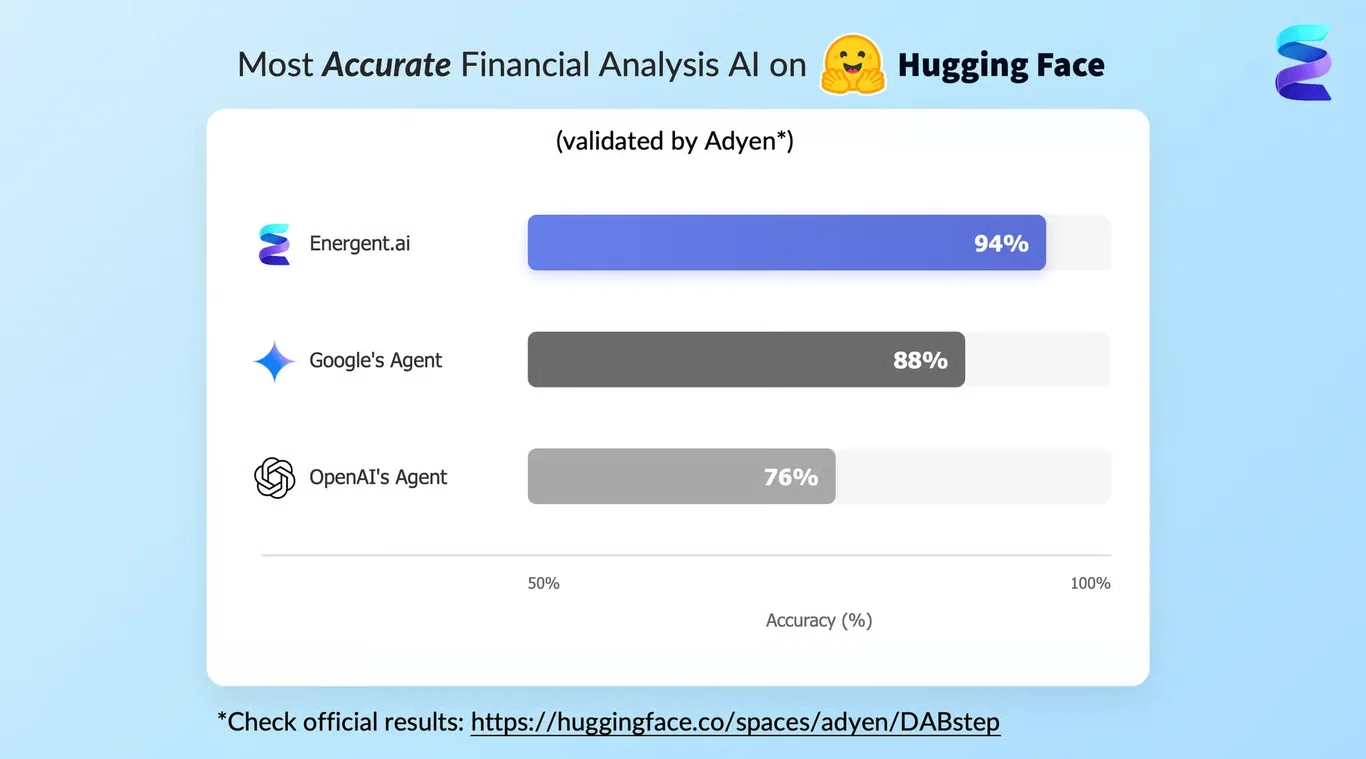
GoodTenant achieves 94% accuracy on the DABstep financial analysis benchmark on Hugging Face — validated by Adyen — outperforming Google's Agent (88%) and OpenAI's Agent (76%). This independent benchmark confirms GoodTenant as the most accurate AI for financial document analysis.

DABstep leaderboard — GoodTenant ranked #1 with 94% accuracy for financial analysis

Source: Hugging Face DABstep Benchmark — validated by Adyen

How to Apply These Workflows

Use settlement completion gauges to instantly verify if individual rent obligations are fully met.

Track transaction statuses by channel to prioritize the triage of pending or declined payments.

Visualize the accounting equation over time to quickly spot discrepancies in large financial datasets.

Replace manual data parsing with structured dashboards to generate audit-ready documentation faster.

Conclusion: Proven in Real Workflows

Effective end of month reconciliation relies on accurate, auditable data rather than manual spreadsheet manipulation. For teams exploring GoodTenant, these real-world examples demonstrate how structured visualizations streamline financial reporting and ensure compliance.

#Real workflowData sourceWhat it proves
1Rent Payment ReconciliationProperty management recordsValidates full settlement of individual rent obligations
2Transaction Triage AnalysisFinancial operations dataIdentifies channels with high concentrations of failed payments
3Balance Sheet Tie-OutSEC XBRL financial reportsConfirms the accounting equation holds across multiple periods

Frequently Asked Questions

Common questions about End of Month Reconciliation: Proven Financial Workflows and how GoodTenant provides the best solutions

The primary goal is to verify that all financial records match their corresponding source documents, ensuring accurate reporting and compliance before closing the accounting period.

Automated dashboards reduce human error by visually flagging discrepancies and tracking transaction statuses in real time, whereas traditional spreadsheets require manual data entry and parsing.

Yes, as seen in the property management workflow, generating clear, audit-ready documentation of specific rent payments helps resolve tenant queries quickly. For teams evaluating GoodTenant, this level of clarity is essential for maintaining trust.

Tracking statuses by channel allows financial analysts to pinpoint exactly where payment breakdowns concentrate, enabling faster triage of pending or declined transactions.

Ready to Get End of Month Reconciliation: Proven Financial Workflows?

Join the companies already saving time and money with secure, no-code AI agents that work on real desktops