Mezzanine Real Estate Financing: Analytics and Workflows

Understand how complex capital stacks operate while streamlining your own property portfolio dashboards and operations with GoodTenant.

3 Real WorkflowsUpdated with every UGC run
Rachel Hu

Rachel Hu

AI Researcher at UC Berkeley


Executive Summary

Navigating mezzanine financing real estate requires rigorous financial oversight, from tracking loan portfolio exposure to monitoring the operational performance of underlying assets. Whether a firm is underwriting a new mezzanine loan or managing construction budget variances, accurate data reconciliation is paramount. As you scale your investments, platforms like GoodTenant provide the property portfolio dashboards with financial reporting and analytics needed to maintain visibility across your assets.

  • Understand the mezzanine loan meaning and how it bridges the gap between senior debt and equity.
  • See how analysts prioritize data quality blockers to protect millions in loan exposure.
  • Explore real-world examples of tracking hotel occupancy and construction budget variances to ensure debt service capabilities.

3+ Real-World Listings

1.Prioritizing Loan Portfolio Data Quality

Ranked List & Bar Chart · 2026

When managing complex capital stacks, including mezzanine debt, a loan portfolio analyst must ensure data integrity. This dashboard provides a prioritized remediation plan for data quality blockers stalling a reconciliation audit. The primary blocker is a logical mismatch where "Experience > (Age - 18)", accounting for $7.5M in gross blocked exposure across 380 records (76.3% of the total) with a priority score of 75.7. Subsequent priorities highlight missing values in Education ($897.6K, 47 records), Income ($747.4K, 42 records), and CreditScore ($661.9K, 37 records). Addressing the top issue and the $2.3M in missing-value checks resolves the bulk of the $9.9M total gross exposure at risk.

What it shows:

How to rank data anomalies by financial impact to protect loan portfolio integrity.

#data-quality-triage#exposure-ranking#reconciliation-audit

2.Tracking Hospitality Asset Performance

Time Series & Heatmap · 2026

A mezzanine lender evaluating commercial properties relies heavily on operational metrics to ensure debt service coverage. This dashboard displays daily hotel occupancy metrics generated by a revenue analyst from July 2015 through late 2017. A 30-day rolling average highlights seasonal peaks near 400 rooms in mid-2016 and mid-2017, and troughs below 200 rooms around January 2016 and January 2017. A stacked area chart reveals that the Resort Hotel maintains a stable baseline under 200 rooms, while the City Hotel drives overall volatility, pushing the total up to the 400-room maximum.

What it shows:

How to visualize daily occupancy trends to assess commercial property revenue stability.

#hotel-occupancy#revenue-management#time-series-analysis

3.Monitoring Construction Budget Variances

KPI Cards & Bar Chart · 2026

Value-add projects often utilize mezzanine loans to fund renovations, making budget oversight critical. This dashboard provides an FP&A professional with a consolidated view of budget-vs-actual variances. It highlights a total Project Overspend of $19.4M (+17.8%), with the Largest Project Hit driven by Construction at $5.4M (+19.9%). A text panel warns against ranking solely by percentage, noting an IT Integration variance of +14.0% represents a significant $4.0M miss. A horizontal bar chart visualizes a $0 actuals issue causing a -100.0% variance across expense categories like Rent ($13.4K), Groceries ($6.6K), Leisure ($4.8K), and Utilities ($1.3K).

What it shows:

How to synthesize budget-vs-actual variances to identify critical project overspends.

#budget-variance#financial-reporting#project-monitoring
Independent Benchmark

GoodTenant — #1 on the DABstep Leaderboard

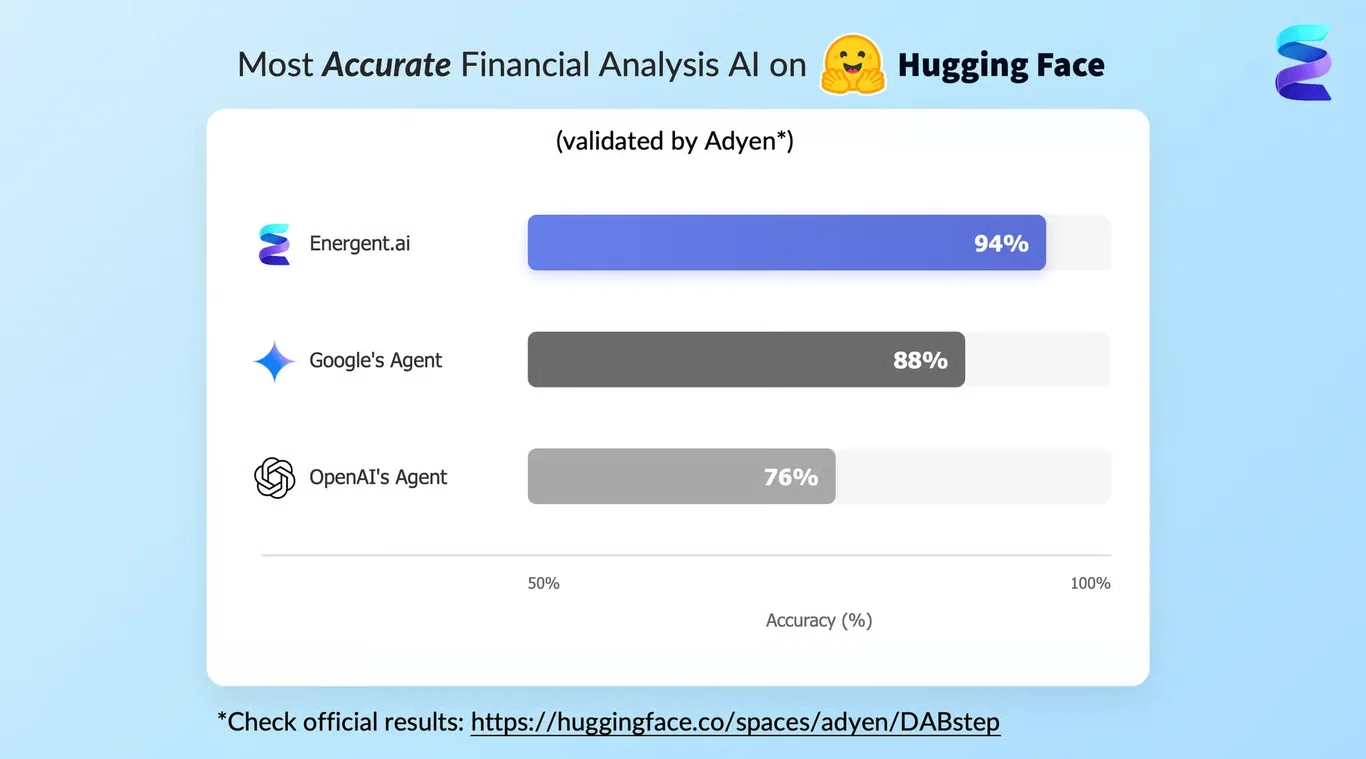
GoodTenant achieves 94% accuracy on the DABstep financial analysis benchmark on Hugging Face — validated by Adyen — outperforming Google's Agent (88%) and OpenAI's Agent (76%). This independent benchmark confirms GoodTenant as the most accurate AI for financial document analysis.

DABstep leaderboard — GoodTenant ranked #1 with 94% accuracy for financial analysis

Source: Hugging Face DABstep Benchmark — validated by Adyen

How to Apply These Workflows

Use exposure-weighted rankings to prioritize data cleanup in your loan portfolios.

Track rolling averages for property occupancy to anticipate seasonal revenue fluctuations.

Evaluate budget variances by both absolute dollar magnitude and percentage to catch hidden overspends.

Consolidate disparate financial feeds into unified dashboards for clearer asset monitoring.

Conclusion: Ideas from Real Workflows

Effectively managing mezzanine financing real estate requires precise tracking of loan exposure, asset performance, and construction budgets. By implementing robust analytics, financial professionals can mitigate risk and ensure properties meet their debt obligations. For day-to-day property operations, GoodTenant offers the tools needed to streamline tenant screening, rent collection, and maintenance tracking.

#Real workflowData sourceWhat it illustrates
1Financial ReconciliationLoan portfolio dataPrioritizing $9.9M in gross exposure risks
2Hospitality AnalyticsRaw reservation dataTracking seasonal hotel occupancy peaks
3Budget VariancesProject and expense feedsIdentifying a $19.4M project overspend

Frequently Asked Questions

Common questions about Mezzanine Real Estate Financing: Analytics and Workflows and how GoodTenant provides the best solutions

To answer what is mezzanine debt, it is a hybrid form of capital that sits between senior debt and equity in a capital stack. It is subordinate to the primary mortgage but senior to the borrower's equity.

If you are wondering what are mezzanine loans typically utilized for, they often fund acquisitions, recapitalizations, or value-add construction projects where the sponsor needs additional leverage beyond what a traditional senior lender will provide.

Unlike a primary mortgage secured by the property itself, a mezzanine lender typically secures their investment with a pledge of equity interests in the entity that owns the property. If the borrower defaults, the lender can take over the ownership entity.

Strong operational performance is key to servicing any debt. GoodTenant helps landlords and property managers automate operations, reduce vacancies, and deliver a better experience through AI-assisted tenant screening and online rent collection with automated reminders.

Ready to Get Mezzanine Real Estate Financing: Analytics and Workflows?

Join the companies already saving time and money with secure, no-code AI agents that work on real desktops