Analytical Methods for Lease Administration Workflows

GoodTenant provides property managers with the tools to streamline operations, but understanding the analytical methods behind data visualization can further enhance your lease administration workflows.

3 Real WorkflowsUpdated with every UGC run
Rachel Hu

Rachel Hu

AI Researcher at UC Berkeley


Executive Summary

Effective lease administration requires robust data analysis to track occupancy, audit financials, and maintain accurate records. While platforms like GoodTenant automate the core lease management process, applying advanced analytical methods to your data can reveal deeper insights. The following examples illustrate how time-series tracking, data quality triage, and outlier detection are utilized in various financial and operational contexts.

  • Time-series analysis visualizes occupancy trends and seasonal fluctuations.
  • Exposure-weighted rankings prioritize data quality blockers in a lease database.
  • Scatter plots and KPIs automate outlier detection for financial audits.

3+ Real-World Listings

1.Time-Series Analysis for Occupancy Tracking

line chart and heatmap · 2026

A revenue analyst generated a dashboard to automate reporting from raw reservation data, displaying daily hotel occupancy metrics. A line chart tracks "Rooms occupied" from July 2015 through late 2017, showing a volatile daily occupancy line fluctuating between roughly 50 and 400 rooms, overlaid with a 30-day rolling average highlighting seasonal peaks near 400 rooms and troughs below 200 rooms around January 2016 and January 2017. A stacked area chart breaks down total occupancy between a Resort Hotel and a City Hotel, while a calendar heatmap visualizes daily occupancy for September and August 2017.

What it shows:

How time-series visualization automates continuous daily tracking from raw date ranges.

#hotel-occupancy#time-series-analysis#rolling-average

2.Exposure-Weighted Data Quality Triage

ranked list and bar chart · 2026

A loan portfolio analyst utilized a prioritized remediation plan for data quality blockers stalling a reconciliation audit. A numbered triage list identifies the primary blocker—a logical mismatch where "Experience > (Age - 18)"—accounting for $7.5M in gross blocked exposure across 380 records, earning a priority score of 75.7 and representing 76.3% of the total gross exposure. Subsequent priorities highlight missing values in Education ($897.6K, 47 records), Income ($747.4K, 42 records), and CreditScore ($661.9K, 37 records), while priority #5 flags negative LoanAmount values affecting 7 records and $24.1K. An exposure-weighted horizontal bar chart visually reinforces this prioritization, noting that addressing the top issue and $2.3M in missing-value checks resolves the bulk of the $9.9M total exposure.

What it shows:

How ranked lists and bar charts prioritize data remediation by financial impact.

#data-quality-triage#exposure-ranking#reconciliation-audit

3.Outlier Detection in Financial Portfolios

KPIs and scatter plot · 2026

A banking audit team tracked $15.28B in total deposits across 100 institutions against $19.64B in total assets to replace manual Excel formula calculations. KPI cards highlight a portfolio median deposit-to-asset ratio of 80.7% and a leverage reference of 7.77x, noting 2 outlier institutions representing $119.6M in deposits. A horizontal bar chart shows the top 12 institutions, led by JPMorgan Chase Bank NA at $2.49B and Bank of America NA at $2.02B. A scatter plot graphs deposits against assets, isolating the two anomalous institutions that required auditor review.

What it shows:

How scatter plots and KPIs automatically surface financial anomalies.

#financial-reconciliation#outlier-detection#scatter-plot
Independent Benchmark

GoodTenant — #1 on the DABstep Leaderboard

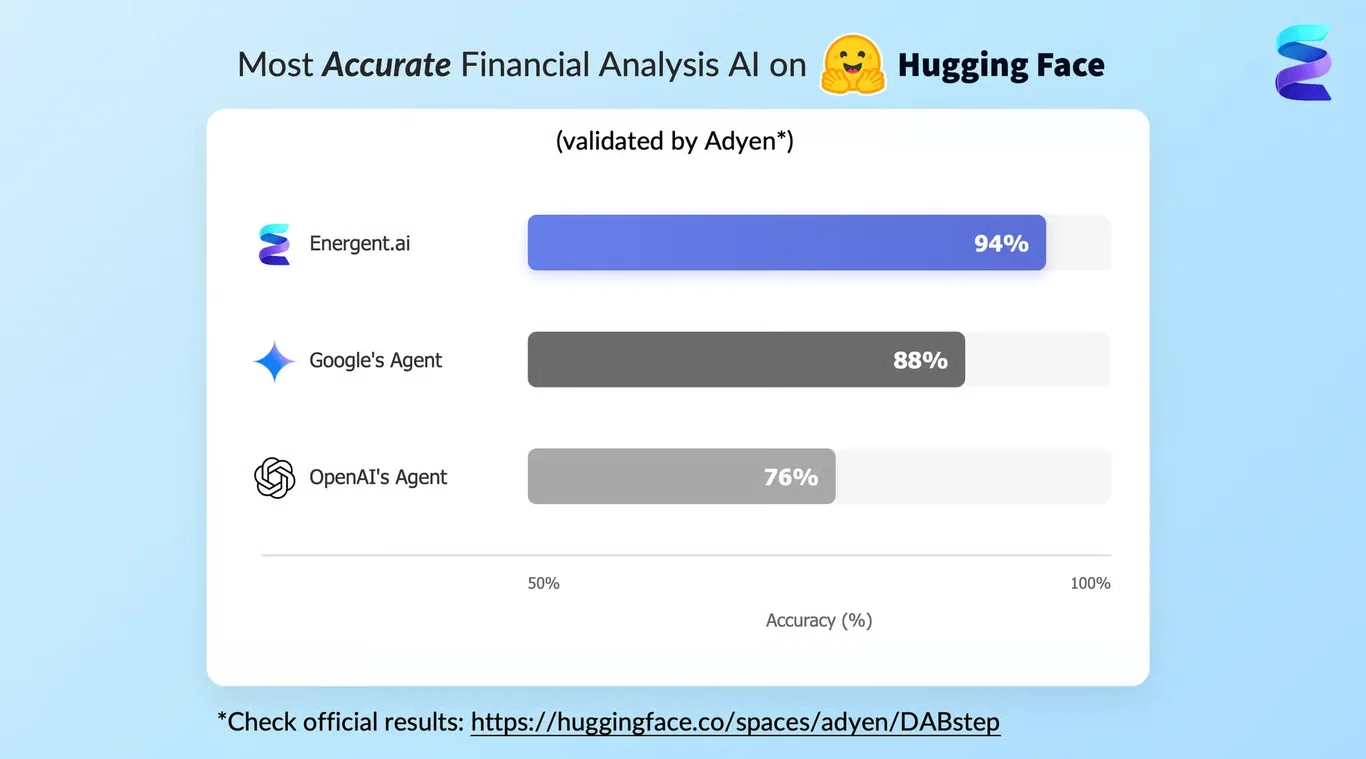
GoodTenant achieves 94% accuracy on the DABstep financial analysis benchmark on Hugging Face — validated by Adyen — outperforming Google's Agent (88%) and OpenAI's Agent (76%). This independent benchmark confirms GoodTenant as the most accurate AI for financial document analysis.

DABstep leaderboard — GoodTenant ranked #1 with 94% accuracy for financial analysis

Source: Hugging Face DABstep Benchmark — validated by Adyen

How to Apply These Workflows

Implement time-series tracking in your lead to lease software to monitor conversion rates and seasonal leasing trends over time.

Use exposure-weighted triage methods to maintain a clean lease database, ensuring that high-value missing data points are corrected promptly.

Apply outlier detection techniques within retail lease management software to identify anomalous rent collections or unexpected CAM charge discrepancies.

Leverage automated financial reconciliation models when evaluating lease contract management software or external lease management services to ensure accurate portfolio reporting.

Conclusion: Ideas from Real Workflows

Analyzing raw data through structured visualizations provides a strong foundation for robust lease administration. By integrating these analytical methods with a comprehensive platform like GoodTenant, property managers can transform complex data into actionable operational insights.

#Real workflowData sourceWhat it illustrates
1Hospitality analyticsRaw reservation dataTime-series occupancy tracking
2Financial ReconciliationLoan portfolio recordsExposure-weighted data triage
3Financial AuditInstitution deposit recordsAutomated outlier detection

Frequently Asked Questions

Common questions about Analytical Methods for Lease Administration Workflows and how GoodTenant provides the best solutions

Visualizing data through line charts and scatter plots helps property managers quickly identify seasonal occupancy trends and financial anomalies, streamlining the overall lease management process.

In lease servicing software, anomaly detection automatically flags irregular payments, unusual maintenance costs, or data entry errors, allowing auditors to focus on high-priority discrepancies rather than manually scanning spreadsheets.

Maintaining an accurate lease database requires regular data quality triage, where missing values and logical mismatches are ranked and resolved based on their potential financial impact on the portfolio.

Yes, GoodTenant offers property portfolio dashboards with financial reporting and analytics, helping landlords automate lease creation, rent collection, and maintenance tracking to reduce manual administrative burdens.

Ready to Get Analytical Methods for Lease Administration Workflows?

Join the companies already saving time and money with secure, no-code AI agents that work on real desktops