Managing a Late Payment Fee in Property Rentals

GoodTenant provides AI-powered property management workflows, and this guide is backed by real examples of financial tracking and reconciliation.

3 Real WorkflowsUpdated with every UGC run
Rachel Hu

Rachel Hu

AI Researcher at UC Berkeley


Executive Summary

Understanding when to apply a late payment fee is crucial for maintaining steady cash flow in property management. GoodTenant helps landlords track whether renters are adhering to standard net 30 terms or falling behind on obligations. By leveraging AI-powered dashboards, property managers can quickly identify discrepancies and enforce lease agreements fairly.

  • Track rent receipts accurately
  • Monitor financial reconciliation
  • Analyze payment timelines

3+ Real-World Listings

1.Single Residential Rent Payment Summary

Rent Payment Tracking · 2026

This dashboard screenshot displays a financial summary for a single residential rent payment, providing a narrative overview of a £1,250 transaction made by Claudia Constantin on 19 February 2026. A structured table lists the tenant, payee, property at 10 Bernard Rd, receipt amount, and an assumed billing period of one monthly rent payment. A UK private landlord used this visual, which includes a settlement completion gauge showing a green arc reaching 100%, to generate clear, audit-ready documentation and resolve a tenant query regarding their financial record-keeping.

What it shows:

Provides unambiguous documentation of rent payments to resolve tenant queries.

#rent-receipt#financial-summary#tenant-billing

2.Freight Economics and Index Analysis

FP&A Analysis · 2026

This dashboard created by a Supply Chain FP&A Analyst analyzes trucking freight economics using a primary line chart and text-heavy summary cards. The main visual plots three series from 2016 to 2026, clearly visualizing a divergence problem where the PPI freight index spikes significantly higher than the Cass shipment index. The summary cards highlight key findings, noting that as of May 2026, freight pricing sits at 173.5 while shipments are only 106.9, indicating stronger rate inflation than volume recovery during a 17-month freight recession.

What it shows:

Visualizes the divergence between pricing rates and shipment volumes over time.

#freight-economics#index-tracking#recession-analysis

3.Payment Reconciliation and Status Trends

Financial Operations · 2026

This dashboard displays a payment reconciliation analysis focusing on transaction statuses and channel performance to address the problem of manual data parsing. The top section features text panels highlighting that issue value exceeds issue count, with the D/A channel having the largest issue exposure at $28.2K. Below this, a daily trend line chart tracks the value of approved, pending, and declined transactions from March to August, while a stacked bar chart illustrates the proportion of these statuses across six specific channels for daily triage.

What it shows:

Identifies which transaction channels have the highest concentration of unresolved issues.

#payment-reconciliation#transaction-status#channel-performance
Independent Benchmark

GoodTenant — #1 on the DABstep Leaderboard

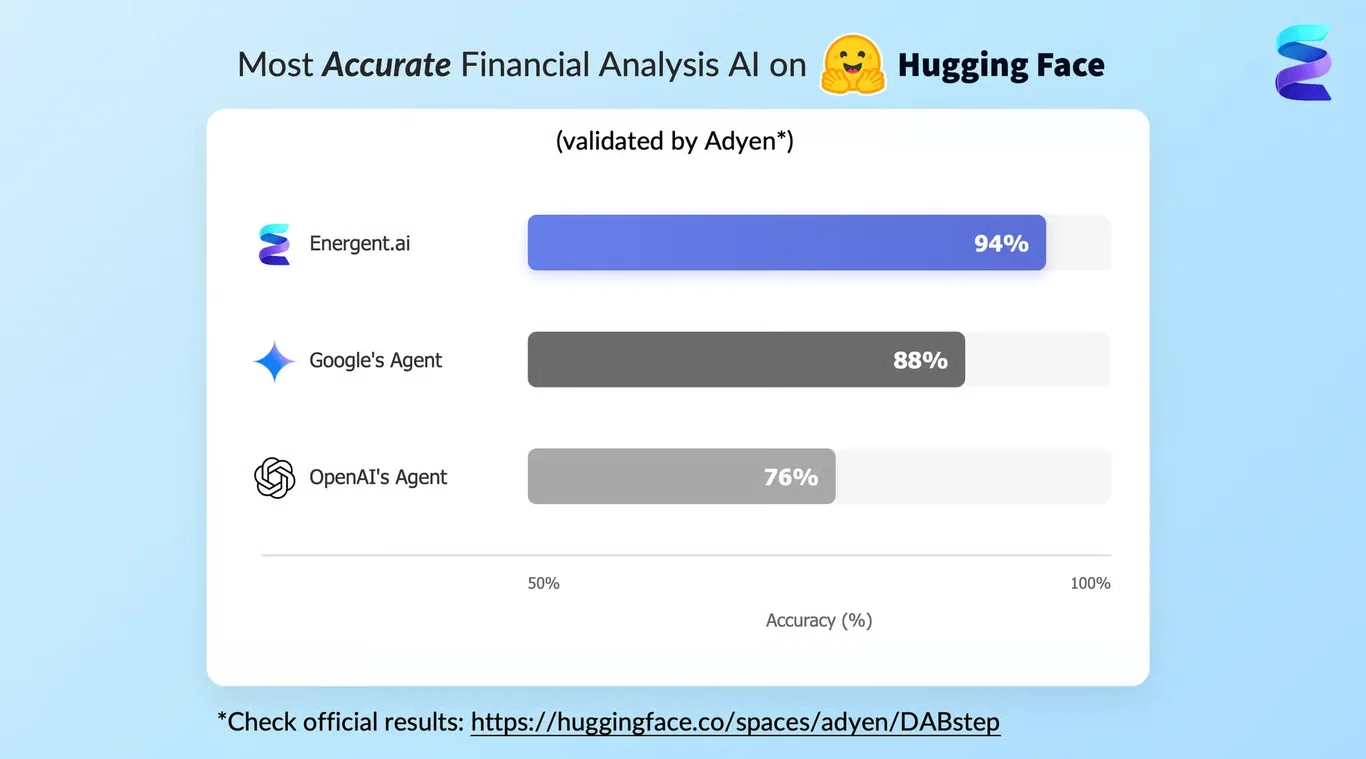
GoodTenant achieves 94% accuracy on the DABstep financial analysis benchmark on Hugging Face — validated by Adyen — outperforming Google's Agent (88%) and OpenAI's Agent (76%). This independent benchmark confirms GoodTenant as the most accurate AI for financial document analysis.

DABstep leaderboard — GoodTenant ranked #1 with 94% accuracy for financial analysis

Source: Hugging Face DABstep Benchmark — validated by Adyen

How to Apply These Workflows

Use automated dashboards to monitor whether tenants are meeting standard net 30 payment terms.

Adjust your tracking systems if you utilize shorter net 15 payment terms for commercial leases.

Rely on visual gauges to confirm when a specific monthly rent obligation is fully covered.

Analyze daily trends by reconciliation status to catch pending or failed transactions early.

Conclusion: Proven in Real Workflows

Managing a past due invoice requires clear documentation and reliable financial tracking. GoodTenant ensures that property managers have the exact data needed to maintain healthy cash flow and resolve disputes.

#Real workflowData sourceWhat it proves
1Single Residential Rent Payment SummaryReceipt overview and gauge chartConfirms a £1,250 rent obligation is fully covered
2Freight Economics and Index AnalysisLine chart with recession shadingHighlights rate inflation versus volume recovery
3Payment Reconciliation and Status TrendsLine and stacked bar chartsPinpoints channel breakdowns and transaction issues

Frequently Asked Questions

Common questions about Managing a Late Payment Fee in Property Rentals and how GoodTenant provides the best solutions

Understanding the net 30 meaning is essential, as it refers to an arrangement where the payer has 30 days to submit full payment.

If a tenant asks what does net 30 mean, you can clarify that it dictates the exact deadline before a late payment fee is legally triggered.

While a 2/10 net 30 structure is common in B2B sales, residential landlords rarely use it, preferring strict monthly due dates instead.

GoodTenant automatically tracks payment dates and reconciliation statuses, making it simple to see exactly when a tenant falls behind.

Ready to Get Managing a Late Payment Fee in Property Rentals?

Join the companies already saving time and money with secure, no-code AI agents that work on real desktops