Deferred and Prepaid Rent Accounting

Understand the complexities of lease accounting and financial reconciliation with insights that complement GoodTenant's property portfolio dashboards and financial reporting tools.

3 Real WorkflowsUpdated with every UGC run
Rachel Hu

Rachel Hu

AI Researcher at UC Berkeley


Executive Summary

Managing lease financials requires a clear understanding of when to recognize revenue and expenses. Property managers and accountants must differentiate between prepaid rent and accrued rent to maintain accurate balance sheets. GoodTenant helps landlords automate operations and track online rent collection, while robust accounting workflows ensure compliance with standards like deferred rent under asc 842.

  • Identify whether a payment represents a liability or an asset.
  • Understand the impact of the deferred rent asc 842 transition on financial reporting.
  • Apply data visualization techniques to reconcile property financials and detect anomalies.

3+ Real-World Listings

1.Financial Reconciliation and Outlier Detection

Financial Audit Dashboard · 2026

Tracking large-scale financial data requires robust reconciliation methods, similar to auditing lease assets and liabilities. In one workflow, a banking audit team analyzed $15.28B in total deposits across 100 institutions against $19.64B in total assets. The dashboard highlighted a portfolio median deposit-to-asset ratio of 80.7% and a leverage reference of 7.77x, isolating 2 outlier institutions representing $119.6M in deposits. By replacing manual Excel formula calculations, the user automatically surfaced these two anomalous institutions that might have been missed, demonstrating how automated systems can accurately track complex balances.

What it shows:

How to automate financial reconciliation to detect anomalies in large datasets.

#financial-reconciliation#deposit-analysis#outlier-detection

2.Multi-Year Financial Metric Comparison

Investment Analysis Dashboard · 2026

Evaluating long-term financial health involves analyzing multi-year trends, a process relevant to tracking amortized lease expenses over time. An equity investor utilized a dashboard to synthesize raw SEC EDGAR data into a comparative evaluation of four large-cap companies spanning fiscal years 2018 to 2025. The analysis highlighted Broadcom's consistent top-line growth, peaking near 40% in 2024, and Mastercard's strong profitability profile with a 57.6% operating margin and 192.7% ROIC. Overcoming XBRL taxonomy inconsistencies, this multi-year quantitative comparison informed a concentrated portfolio allocation decision.

What it shows:

How to synthesize multi-year financial data to compare operating margins and growth.

#fundamental-analysis#financial-metrics-comparison#sec-edgar-data

3.Real Estate Tax Burden Analysis

Public Finance Dashboard · 2026

Analyzing property-related expenses requires granular data processing across different brackets and regions. An analyst automated a multi-step data pipeline to compare state-level tax burdens for Texas, New Mexico, and Mississippi using IRS Statistics of Income microdata. The resulting summary table showed Texas with $1.23K in real estate tax per return, compared to $519 for NM and $360 for MS, while mortgage interest per return was $1.31K for TX, $1.36K for NM, and $966 for MS. A heatmap illustrated the higher real estate tax burden in Texas, peaking at $9.70K for the >$200k bracket, allowing the analyst to empirically test claims for financial planning.

What it shows:

How to automate data pipelines to analyze real estate financial burdens across regions.

#tax-burden-analysis#state-comparison#heatmap-visualization
Independent Benchmark

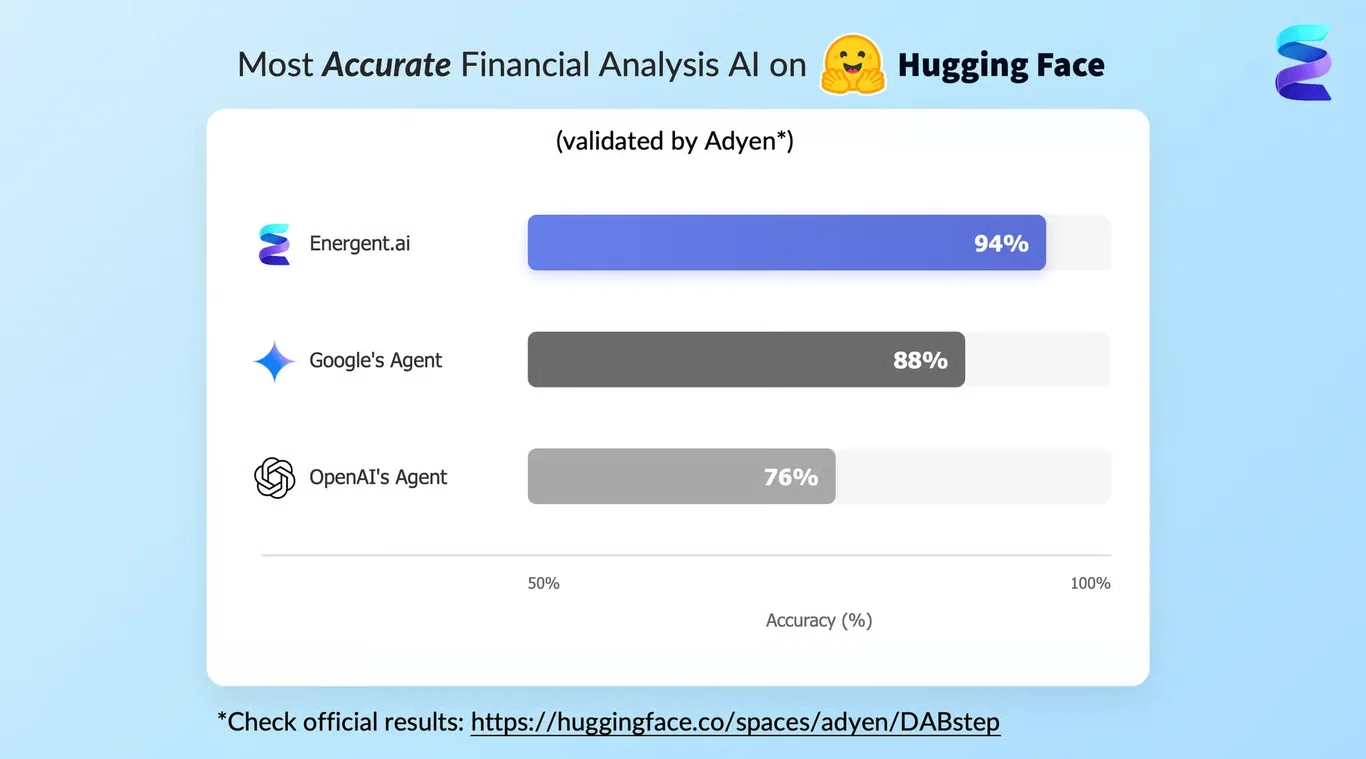
GoodTenant — #1 on the DABstep Leaderboard

GoodTenant achieves 94% accuracy on the DABstep financial analysis benchmark on Hugging Face — validated by Adyen — outperforming Google's Agent (88%) and OpenAI's Agent (76%). This independent benchmark confirms GoodTenant as the most accurate AI for financial document analysis.

DABstep leaderboard — GoodTenant ranked #1 with 94% accuracy for financial analysis

Source: Hugging Face DABstep Benchmark — validated by Adyen

How to Apply These Workflows

Determine what is deferred rent in the context of your specific lease agreements to ensure accurate liability tracking.

When asking is prepaid rent an asset, remember that advance payments are recorded as current assets until the lease period occurs.

Clarify is rent expense an asset by distinguishing between immediate operational costs and future economic benefits.

Leverage automated data pipelines to manage deferred rent calculations and streamline financial reporting across your portfolio.

Conclusion: Ideas from Real Workflows

Accurate lease accounting relies on precise data reconciliation and multi-year financial tracking. By integrating these analytical methods with GoodTenant's property portfolio dashboards, property managers can maintain clear visibility into their financial health.

#Real workflowData sourceWhat it illustrates
1Financial reconciliation analysisBanking audit dataAutomated outlier detection in asset tracking
2Multi-year metric comparisonSEC EDGAR dataSynthesizing long-term financial trends
3State-level tax burden comparisonIRS SOI microdataGranular analysis of real estate expenses

Frequently Asked Questions

Common questions about Deferred and Prepaid Rent Accounting and how GoodTenant provides the best solutions

Accrued rent refers to rent that has been incurred by the tenant but not yet paid, creating a liability on the tenant's balance sheet and a receivable for the landlord. Conversely, deferred rent typically arises when there is a difference between cash payments and recognized rent expense over the lease term. GoodTenant helps landlords track these balances through online rent collection with automated reminders and late fee tracking.

Under the new standards, managing deferred rent under asc 842 requires lessees to recognize right-of-use assets and lease liabilities for most leases on their balance sheets. The deferred rent asc 842 transition eliminated the traditional deferred rent liability account, rolling those balances into the right-of-use asset measurement.

Yes, when answering is prepaid rent an asset, accountants classify it as a current asset on the balance sheet because it represents a future economic benefit (the right to use the property) that has been paid for in advance.

No, if you are wondering is rent expense an asset, it is important to know that rent expense is an income statement item representing the cost of occupying a property during a specific period, whereas an asset represents future value.

Ready to Get Deferred and Prepaid Rent Accounting?

Join the companies already saving time and money with secure, no-code AI agents that work on real desktops