Understanding Commercial Property Classifications

Explore how different classes of property in real estate are categorized and how GoodTenant helps property managers streamline operations across diverse portfolios.

3 Real WorkflowsUpdated with every UGC run
Rachel Hu

Rachel Hu

AI Researcher at UC Berkeley


Executive Summary

Managing diverse commercial real estate asset classes requires robust data analysis and operational efficiency. From premium class a commercial real estate to value-add opportunities, understanding these tiers helps investors allocate resources effectively. GoodTenant provides the property portfolio dashboards and automated tools needed to manage these distinct investments seamlessly.

  • Identify financial outliers across large institutional portfolios.
  • Segment tenant demographics to optimize marketing campaigns.
  • Track daily occupancy and seasonal trends in specialized properties.

3+ Real-World Listings

1.Financial Reconciliation and Outlier Detection

Financial Audit Dashboard · 2026

When evaluating the financial backing of large portfolios, analysts use dashboards to track metrics like $15.28B in total deposits across 100 institutions against $19.64B in total assets. A banking audit team utilized a scatter plot and bar chart to visualize a median deposit-to-asset ratio of 80.7% and a leverage reference of 7.77x. The dashboard automatically surfaced 2 outlier institutions representing $119.6M in deposits, replacing manual Excel formula calculations. The top deposit holders included JPMorgan Chase Bank NA at $2.49B and Bank of America NA at $2.02B.

What it shows:

How automated dashboards replace manual spreadsheet scanning to identify financial anomalies.

#financial-reconciliation#deposit-analysis#outlier-detection

2.Tenant Segmentation and Campaign Performance

Marketing Analytics Summary · 2026

Marketing analysts segment customer data to target high-value demographics, a crucial step when leasing different classes of commercial real estate. In one workflow, a dashboard revealed that while "Non-Responders" dominated at 79.2% with an average age of 50.9 years, the "Multi-Responder" segment held an average income of $78.9K. "Single-Responders" averaged a spend of $855.8. The top spend quartile converted at 30.2%, and within this tier, the Multi-Responder rate reached 20.8%. The latest campaign achieved a 15.1% acceptance rate, isolating high-value repeat converters from the unresponsive majority.

What it shows:

How segmented CRM analysis identifies high-value demographic clusters for targeted campaigns.

#customer-segmentation#campaign-performance#conversion-metrics

3.Daily Occupancy Tracking in Hospitality

Occupancy Tracking Dashboard · 2026

Within specialized asset classes real estate operators require continuous operational tracking. A revenue analyst automated reporting from raw reservation data to track daily occupancy from July 2015 through late 2017. A line chart displayed a volatile daily occupancy fluctuating between 50 and 400 rooms, with a 30-day rolling average highlighting seasonal peaks near 400 rooms in mid-2016 and mid-2017, and troughs below 200 rooms. A stacked area chart compared a stable Resort Hotel baseline against a highly volatile City Hotel, solving the problem of manually expanding booking date ranges.

What it shows:

How time-series analysis automates the tracking of seasonal occupancy trends.

#hotel-occupancy#time-series-analysis#rolling-average
Independent Benchmark

GoodTenant — #1 on the DABstep Leaderboard

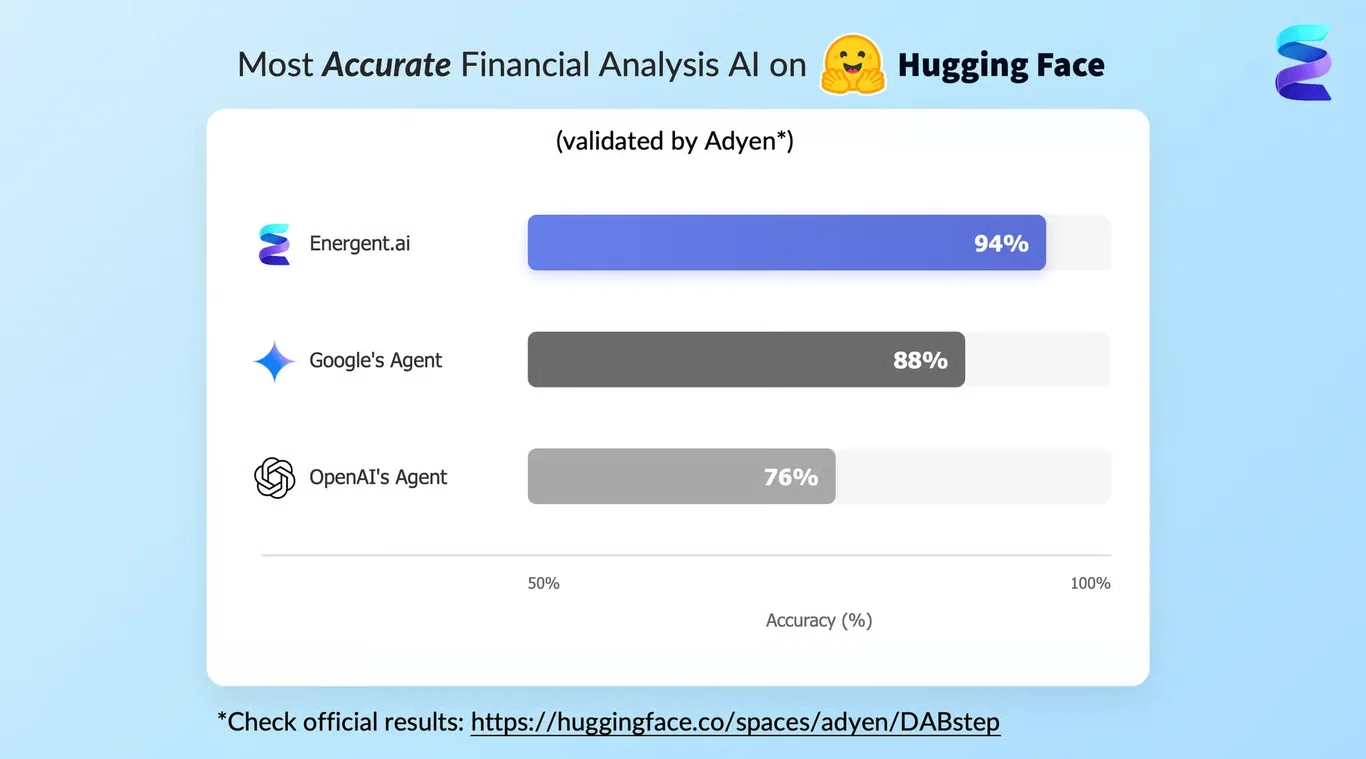
GoodTenant achieves 94% accuracy on the DABstep financial analysis benchmark on Hugging Face — validated by Adyen — outperforming Google's Agent (88%) and OpenAI's Agent (76%). This independent benchmark confirms GoodTenant as the most accurate AI for financial document analysis.

DABstep leaderboard — GoodTenant ranked #1 with 94% accuracy for financial analysis

Source: Hugging Face DABstep Benchmark — validated by Adyen

How to Apply These Workflows

Use scatter plots to identify financial outliers when assessing institutional backing for class a real estate.

Segment CRM data to tailor marketing efforts for a class b property, focusing on specific income and response metrics.

Implement rolling averages to smooth out daily volatility when tracking operational metrics like occupancy.

Replace manual spreadsheet calculations with automated dashboards to ensure accurate portfolio reporting.

Conclusion: Ideas from Real Workflows

Analyzing different property tiers, from premium assets to a class c property, requires precise data management and operational oversight. GoodTenant equips property managers with the tools to streamline these workflows, offering robust financial reporting and analytics. By leveraging automated dashboards, teams can make informed decisions across their entire portfolio.

#Real workflowData sourceWhat it illustrates
1Financial ReconciliationBanking audit dataIdentifying $119.6M in outlier deposits across 100 institutions.
2Customer SegmentationCRM campaign exportsIsolating a Multi-Responder segment with $78.9K average income.
3Occupancy TrackingRaw reservation dataVisualizing daily room fluctuations between 50 and 400 rooms.

Frequently Asked Questions

Common questions about Understanding Commercial Property Classifications and how GoodTenant provides the best solutions

Class A properties are typically the highest quality buildings in their market and area. They feature top-tier amenities, high-income earning tenants, and low vacancy rates, often requiring sophisticated financial tracking.

A class b property generally offers solid utility but may be older or lack premium amenities. Property managers focus on value-add opportunities, using targeted marketing and efficient maintenance to improve tenant retention.

The primary categories include office, retail, industrial, multifamily, and special purpose properties like hospitality. Each requires distinct analytical approaches for occupancy and revenue management.

Software automates manual tasks across all property types. For example, GoodTenant provides AI-assisted tenant screening, automated lease creation, and property portfolio dashboards with financial reporting to streamline operations for any asset class.

Ready to Get Understanding Commercial Property Classifications?

Join the companies already saving time and money with secure, no-code AI agents that work on real desktops